Horse Fence Installation in Norman, OK
Ironclad Fence Norman builds horse fencing across Norman, OK and rural Cleveland County: welded pipe rail, pipe with no-climb wire, wood board fences, paddocks, round pens, arenas, alleys and horse-safe gates. Horses run, lean, kick and chew, so we build for visibility and smooth surfaces, with no barbed wire, rails and wire on the horse’s side, and openings too small for a hoof. As a Norman, OK fence company, we set heavy posts in concrete and plan the layout so horses have no tight corners to get trapped in. Every project starts with a walk of the property and a written, itemized quote.
Why us
Why Choose Us for Horse Fencing in Norman, OK
A cattle fence keeps animals in. A horse fence also has to keep them from hurting themselves on it.
-
Visible to a Running Horse
Pipe and board top rails a horse can see at speed, instead of thin wire it can’t.
-
Nothing to Cut or Trap
No barbed wire, smooth welds, capped ends and openings sized so hooves and heads can’t get caught.
-
Rails on the Horse’s Side
Rails and wire go on the inside, so a horse that leans or bumps pushes them into the posts, not off.
-
Safer Paddock Layout
Rounded corners, alleys between pastures and gates placed where horses don’t crowd.
-
Pipe Rail Horse Fence
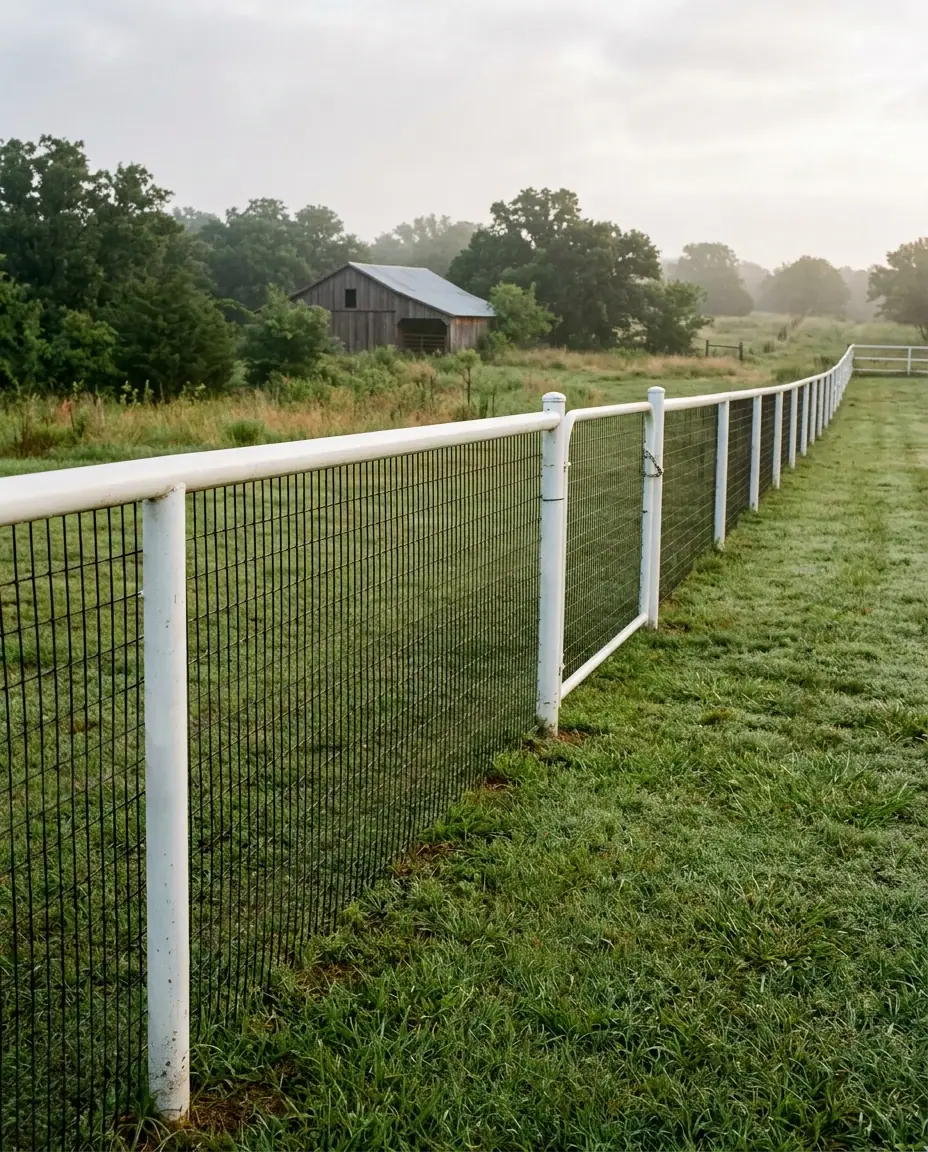
Welded steel pipe in two to four rails, painted. More on pipe fence.
-
No-Climb Wire Fence
Small-opening horse wire on the inside of pipe or wood posts, with a top rail for visibility.
-
Wood Board Fence
Classic three- and four-board fences on heavy posts, with metal caps where horses chew.
-
Round Pens & Arenas
Heavy pipe enclosures for training and riding, with tractor-wide gates.
-
Paddocks & Alleys
Turnout paddocks and double-fenced alleys that keep neighboring horses from fighting over the fence.
-
Horse-Safe Gates
Pipe and tube gates with horse-proof latches. More on gates.
Options
Horse Fence Options Compared
Every option here is horse-safe when it’s built right. They differ in strength, upkeep and how they look.
| Fence | Strengths | Watch out for |
|---|---|---|
| Pipe rail | Very strong, very visible, lasts decades | Rail gaps must be sized so legs and heads can’t get stuck |
| Pipe with no-climb wire | Strong frame plus hoof-proof mesh | Most work to build; the safest all-round choice |
| Wood board | Classic look, visible, forgiving on impact | Chewing, rot and repainting; needs capping |
| No-climb wire with top rail | Economical for large pastures | Needs a visible top rail and tight tension |
Whatever you choose: no barbed wire, rails and wire on the horse’s side, and about 4-1/2 to 5 feet tall.
Cost
What Affects the Cost of a Horse Fence?
Horse fences vary mostly with the type and footage. Your written quote lists each of these as its own line.
Get a free horse fence estimate- Length and height
- Total footage and fence height.
- Fence type
- Pipe rail, pipe with no-climb, wood board or wire with a top rail.
- Pens and arenas
- Heavier panels, closer posts and taller rails.
- Gates and alleys
- Number of gates, gate width and double-fenced alleys.
- Terrain and clearing
- Rolling ground, creeks, brush and access.
- Paint and caps
- Painting pipe, and metal caps on wood boards.
Timeline
How Long Does a Horse Fence Take?
A paddock can be done in days; a whole property of pasture, alleys and an arena takes longer.
- From your call to walking the property, typically
- 1–3 days
- To source pipe and horse wire
- 1–4 weeks
- To build, depending on footage and pens
- Days–weeks
- Concrete cure before rails are welded and gates hung
- 24–72 h
If horses are arriving on a set date, tell us when you book and we’ll fence a safe paddock first.
Process
Our 4-Step Horse Fence Process
-
1. Walk the Property
We walk pastures, paddocks and gates with you, plan the layout and recommend fence types in a written, itemized quote.
-
2. Locates & Clearing
We call OKIE811, clear the line and stake posts, corners and gates.
-
3. Posts in Concrete
Heavy posts go in concrete, corners and gates first, and cure before rails go on.
-
4. Rails, Wire & Walkthrough
We weld or hang rails, attach wire on the inside, hang gates, check for sharp edges and walk it with you.
Questions
Horse Fence FAQ — Norman, OK
Why shouldn't I use barbed wire for horses?
Horses spook, run and kick, and when they hit or tangle in barbed wire the barbs cause deep cuts and serious leg injuries. Horses also see thin wire poorly. A visible fence with smooth surfaces, like pipe rail or no-climb wire with a top rail, is far safer.
How tall should a horse fence be?
Most horse fences are about 4-1/2 to 5 feet tall, roughly at the horse's eye level or higher. Stallions, jumpers and paddocks next to other horses often go taller. The bottom should be low enough that a foal can't roll under it.
What is no-climb horse wire?
It's a woven wire with small openings, about 2 by 4 inches, too small for a hoof to go through. That keeps a horse from catching a leg in the fence when it paws or kicks. It's usually paired with a pipe or board top rail so the fence is easy to see and the wire doesn't get pushed down.
Which side of the posts should the rails go on?
On the horse's side. When a horse leans on or runs into the fence, rails on the inside are pushed against the posts. Rails on the outside can be pushed off. Wire is mounted on the inside for the same reason.
Is pipe fence safe for horses?
Yes, when it's built for horses. Pipe is strong and very visible. The rail spacing matters: gaps should be either small enough that a head or leg can't fit through, or large enough to pull free. Adding no-climb wire on the inside removes the guesswork.
Do you build round pens and arenas?
Yes. We build welded pipe round pens and riding arenas with taller, heavier panels, closer posts and gates wide enough for a tractor to drag the footing.
How do I stop my horse from chewing the fence?
Horses chew wood rails out of boredom or habit, which ruins boards fast. Pipe rail and wire fences can't be chewed, so they're the long-term fix. On a wood board fence, we can add a metal cap strip along the top rail.
Free estimate
Get a Free Horse Fence Estimate
Tell us how many horses, the pastures or paddocks you need fenced and roughly how much fence. We’ll call to set a time to walk the property, then send a written, itemized quote.